Word
The Milk Can (Bidon)
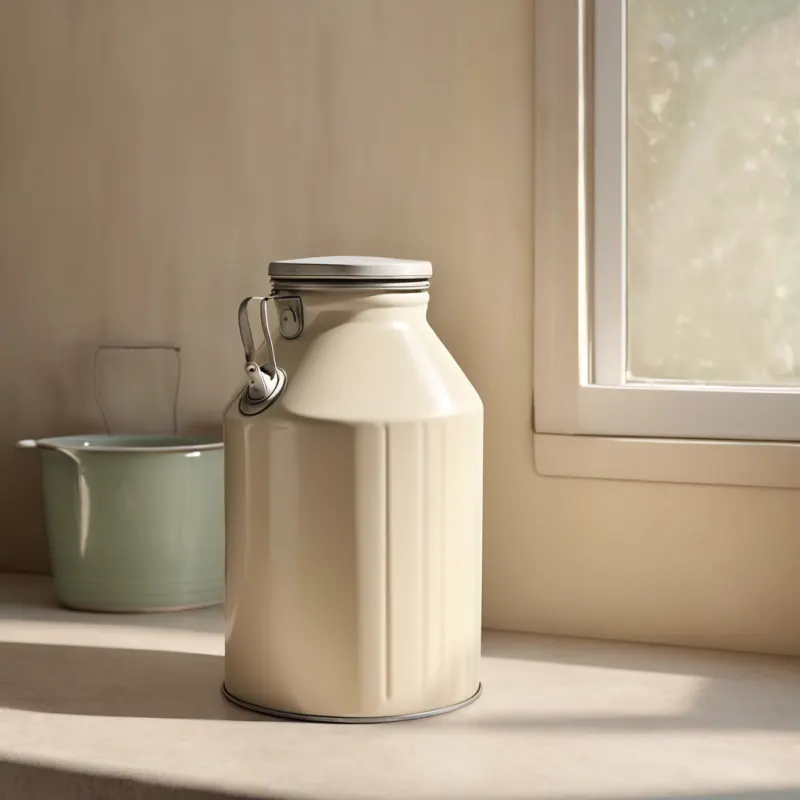
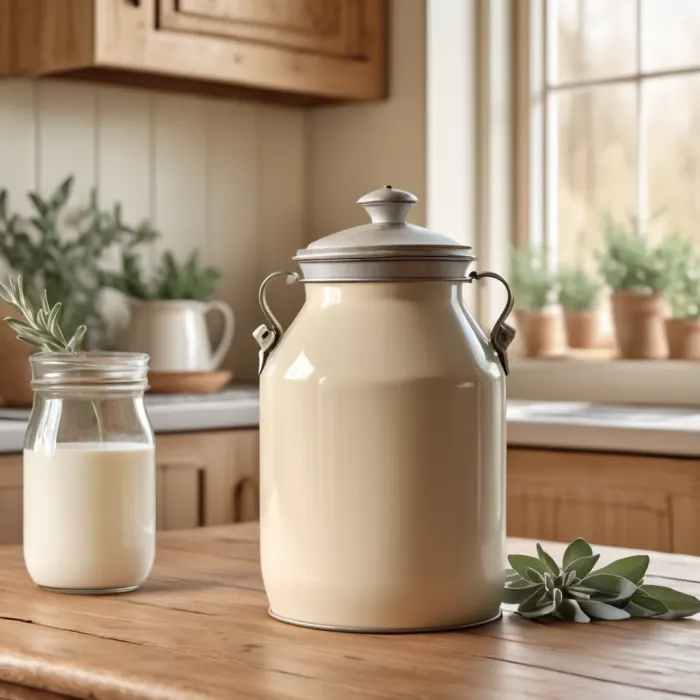
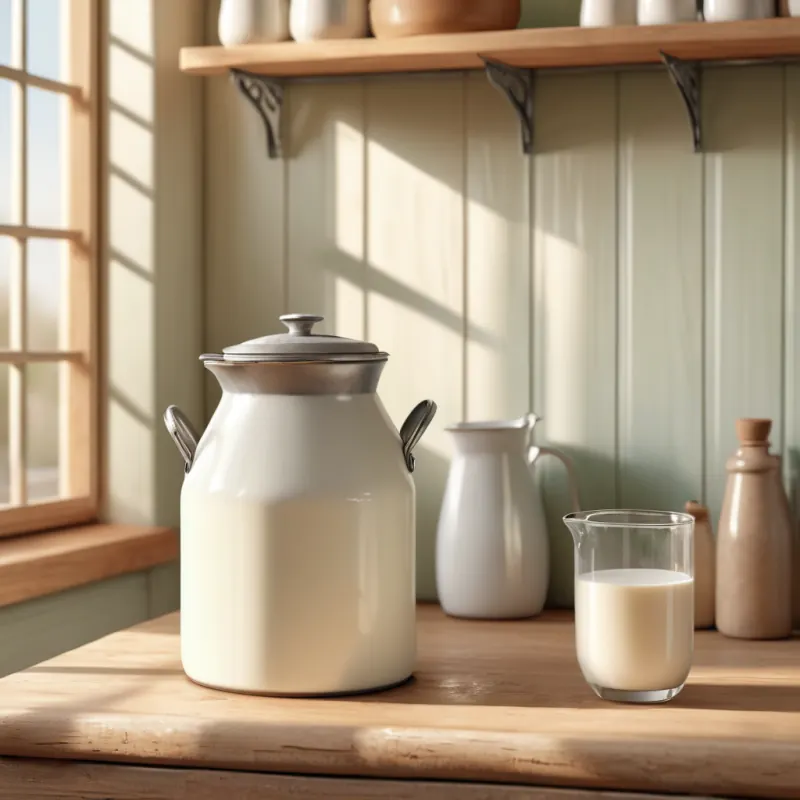
A booming metal vessel with a stiff lid and an awkward handle, without which no trip for milk or kvass was complete. The bidon clanged down the road for the whole courtyard to hear, sloshed over your hand, and was, all the same, utterly indispensable, the faithful companion of the most ordinary, most cozy morning errands.
A Booming Companion on the Way to the Barrel
The bidon had a voice. Empty, it answered every step with a light metallic ring, and a person heading out for milk or kvass could often be heard before they were seen. You couldn't mistake that ring for anything else: a touch hollow, a touch jangly, it floated across the courtyard, bounced off the walls, and added up to a one-of-a-kind morning melody. The bidon seemed to announce all on its own: here comes a person on a good, understandable errand.
Going out with it was a whole little journey. You had to walk all the way to the barrel or the dairy counter, stand a while, wait your turn, and the whole way the bidon swayed in your hand, tapped its lid, snagged your fingers with its handle. Coming back was the nicer part: now it walked along no longer empty, answering differently, deeper and more solid, carrying home something needed and alive.
Metal That Served for Decades
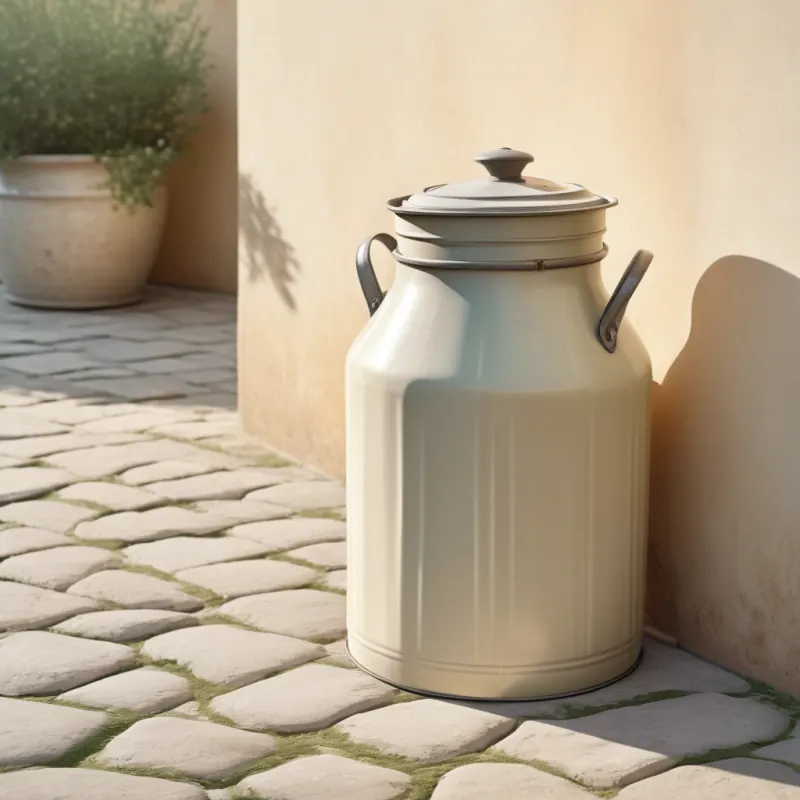
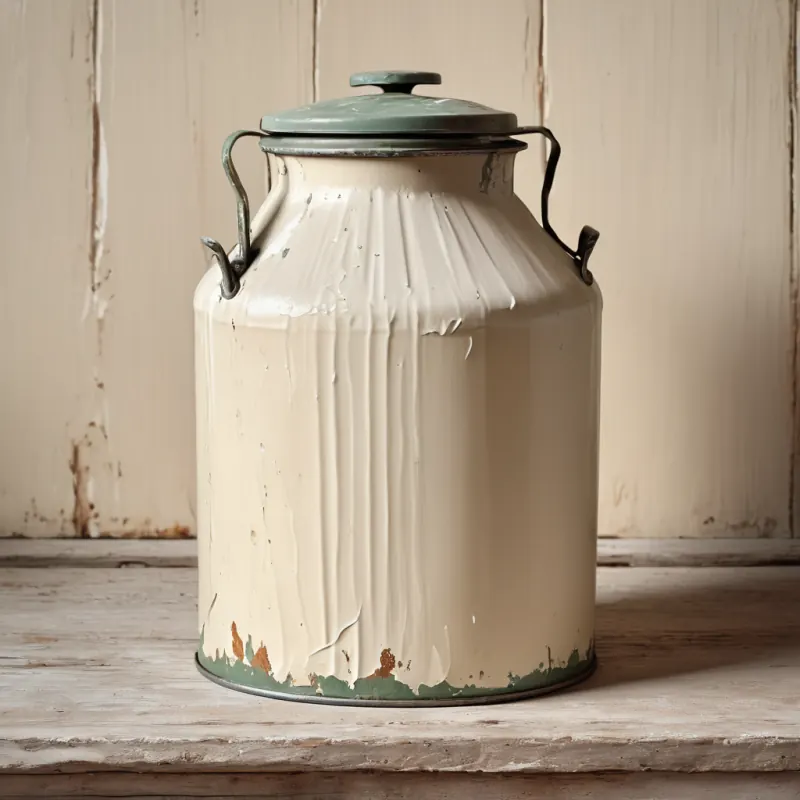
The bidon was built to last, with no expectation that it would ever be thrown out. Smooth or faintly ribbed metal, a snugly fitting lid, a handle that in time began to creak quietly, all of it was meant for years and years of service. The bidon outlasted fashions, outlasted its owners, passed from hand to hand and stayed in the ranks, a little dented but dependable.
Every bidon eventually acquired its own biography. Here a dent from a fall down the stairs, there a patch of flaking paint, on the bottom a barely visible scratch by which its owner unerringly recognized her own among a dozen identical ones. Those marks bothered no one: they meant the thing worked, that it was trusted, that it had walked a long and honest road alongside the household.
The Trip for Milk as a Morning Ritual
The trip for milk was an unhurried, almost ceremonial affair. You'd get up a little earlier, take the bidon, grab some coins, and set off, not yet fully awake, in the cool of the morning. At the counter or the barrel, your own familiar faces were already standing about; you'd say hello, trade a couple of words about the weather, ask whether the delivery was fresh. The queue moved slowly, and there was no irritation in that slowness; on the contrary, there was something soothing about it.
Milk was poured with a ladle or from a big tap, striking the bottom with a pleasant sound and gradually filling the bidon. You'd press the lid down more snugly, check that it wasn't leaking, and set off on the way back. This simple errand had a way of setting the tone for the whole day: if the morning began with an unhurried stroll for milk, then everything afterward somehow went along more calmly, more steadily, more kindly.
Kvass from the Barrel on the Corner
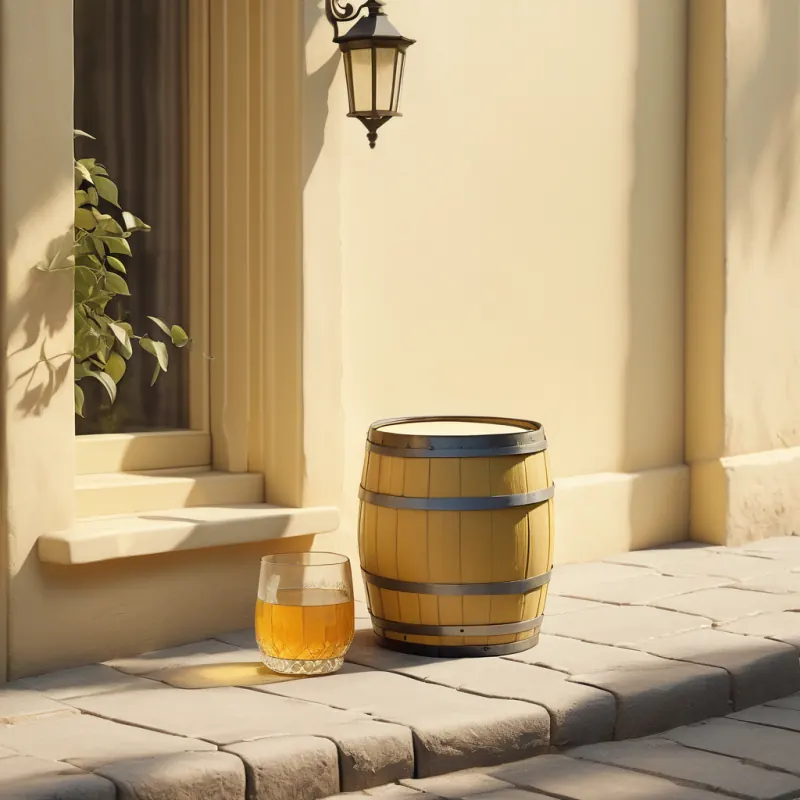
In summer the bidon had a different posting, kvass. A big barrel would appear on the corner, a queue would line up beside it, and in the heat it stretched out especially willingly. Some came with a mug to drink right there, others with a bidon to carry home a whole stock of cool, fizzy, slightly bready happiness. And the bidon was indispensable here: only it could deliver the kvass without losing all its lively fizz along the way.
Kvass from the barrel had the taste of summer itself. Cold and a touch sharp, it banished the stuffiness in an instant, and a single gulp was enough to make the day bearable. At home such a bidon was set in the coolest spot, and then everyone would run to it for refills all evening long. And in the morning the empty vessel was already being rinsed out and made ready for a new trip, because in the heat kvass ran out astonishingly fast.
The Cunning Science of Carrying
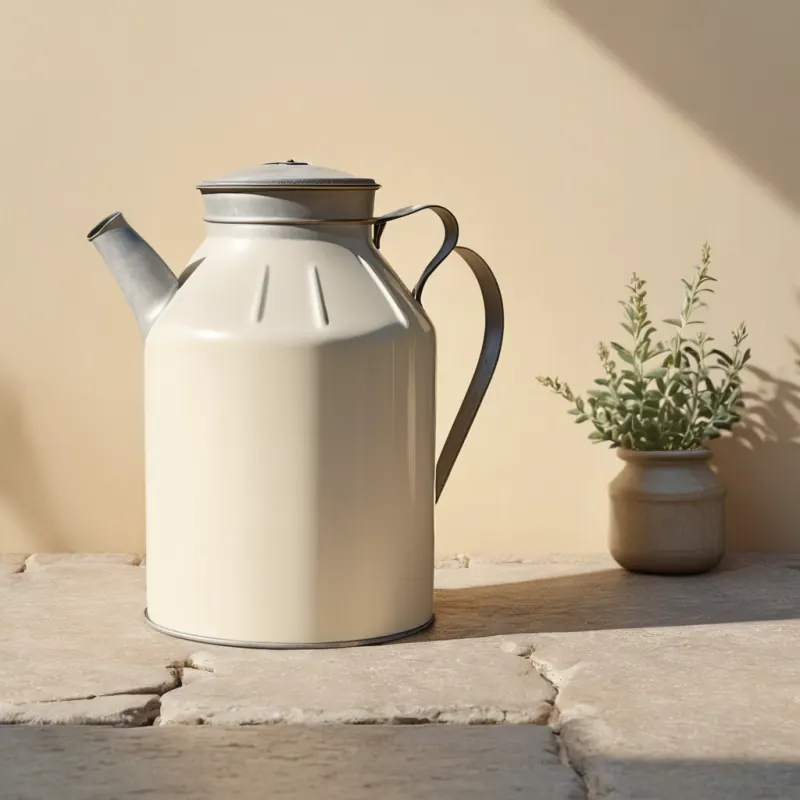
Carrying a full bidon was a skill of its own, learned through personal experience. The handle would try to dig into your palm, the contents sloshed at every clumsy move, and if you hurried, you'd be sure to spill some down your leg or leave a trail of drops along the whole sidewalk. The bidon seemed to teach a person to move smoothly on purpose: it punished the hurried at once with splashes, and generously delivered every last drop for the unhurried.
In time you developed a bidon walk, a particular one, a touch of a waddle, with your arm held out level and your stride smooth. Seasoned travelers could carry it so that not a drop fell astray, and that was a matter of quiet pride. You'd shift it from hand to hand to rest your fingers, steady the lid as you went, a whole little choreography for the sake of getting the milk home intact.
The Bidon's Life at Home
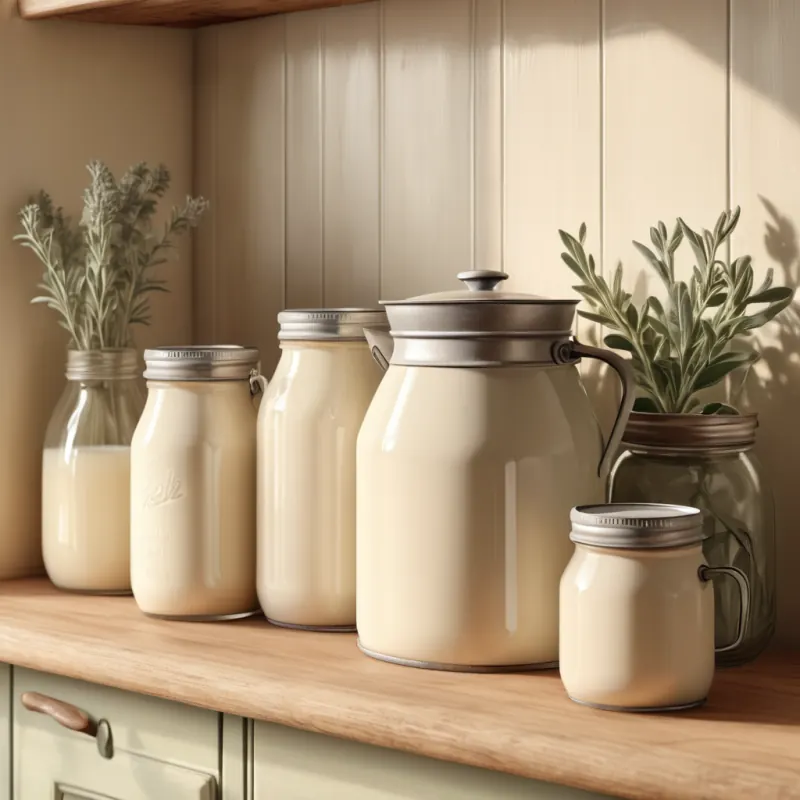
At home the bidon found work too. Once emptied, it didn't lie about uselessly: people kept dry goods in it, stored water in reserve, sometimes pressed it into altogether unexpected service. The thing was too sturdy and too handy to stand idle. Such a bidon usually stood somewhere within reach, in a corner of the kitchen, on a shelf in the hall, out on the balcony, and was always ready to set off again.
Caring for it was simple but obligatory. After milk the bidon was washed thoroughly and dried so no off smell would take hold; after kvass it was rinsed especially carefully. Turned upside down, it dried on the edge of the sink, its sides gleaming, and there was something homely and calm in that, a sign that the household was in order and tomorrow morning had already been seen to.
A Teacher of Unhurriedness
Look closely and the bidon was a quiet mentor of patience. It would not abide fuss, literally, physically: the hurried got wet feet and empty regrets, and the one who walked calmly got every last drop. With a companion like that you can't help learning to move at an even pace, to keep a steady stride and not fidget over trifles, or else you simply won't get it home.
In our cozy game about a factory, where hurrying only gets in the way and calm, unhurried time is what's prized, a booming metal bidon would fit right in. It's of the same breed as the local unhurried errands and quiet queues: it teaches you not to rush and to deliver what you've started right to the end, without spilling it. Maybe that's why, at the word bidon, you immediately hear that very morning ring across the courtyard, the sound of a good, understandable errand that there's nowhere and no reason to do in a hurry.