Word
The Faceted Glass
A thick-walled glass with facets down the sides, heavy, steady, all but indestructible. People drank fruit compote and tea from it, measured out flour with it, covered rising dough with it. And the argument over how many facets it has hasn't died down to this day.
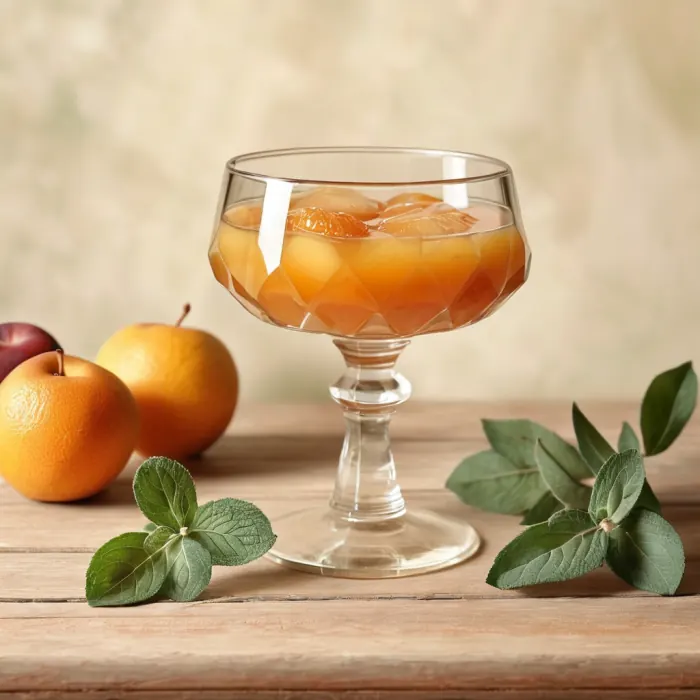
Meet the faceted glass
You can't mistake the faceted glass for anything else. Thick glass, a noticeable heft in the hand, a rim around the top edge, and even vertical facets running down the sides. It stands on the table solidly, like a little tower, and its very look promises: you won't tip me over or break me so easily.
That dependability was no accident. The facets gave the glass strength, and the thick walls forgave clumsy hands, boiling water, and a fall from the table alike. A glass could outlast several generations of a family, moving from cabinet to cabinet, and still serve just as faithfully.
There was something honest and unpretentious about it. No patterns, no gilding, pure function in its purest form. And it was precisely that simplicity that made the faceted glass a truly timeless object, recognized at a glance even by people who never drank from one.

The great facet debate
How many facets does the faceted glass have? That question can split any group of friends. One says sixteen with full confidence, another insists on twenty, a third recalls examples with twelve. And each is right in their own way, because the glasses were made in many varieties.
The facets really did vary: ten, twelve, fourteen, sixteen, twenty. The number depended on the particular shape and batch. So there simply is no single correct answer, and the argument is doomed to be eternal, which, you must admit, only adds to the object's charm.
The funniest part is that nearly everyone remembers their own glass from home and is convinced that its count is the one true answer. Grandma's glass becomes the gold standard of truth. And there's more warmth in that small family stubbornness than in any precise number. Let the facets be as many as memory says.
The smooth band up top
The classic faceted glass has a characteristic detail: a smooth, facetless rim right at the top. The facets run from below, and at the edge the glass becomes a smooth ring. That feature is easy to recognize, and many think it the loveliest part of the glass.
The smooth band wasn't only decoration. An even edge is kinder to the lips, stronger against chipping, and looked tidier. And it was usually up to this rim that people poured if they wanted to fill the glass properly, right to the brim. It made a natural mark, clear without any writing.
Many still remember the rule: up to the band is a full measure, below it is more modest. No lines or numbers were needed; the glass itself told you how much it held. A handy silent scale, built into the shape, tested by millions of teatimes.
Not just for drinking
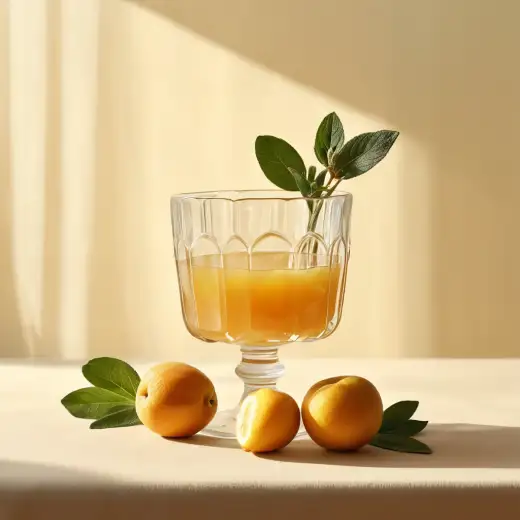
The faceted glass led a double life. People drank from it, of course: tea, compote, fruit drink, kissel, water, milk. But in the kitchen it instantly turned into an indispensable measuring and cooking tool, and in that role it was, perhaps, even more popular.
People measured flour, sugar, and grain with it for recipes: one glass of this, two glasses of that. They cut rounds of dough for dumplings and cookies with it, deftly pressing the edge into the rolled-out sheet. They covered risen dough with it, or set it upside down so something wouldn't boil over.
The result was a wonderfully multipurpose object without a single extra part. One simple shape and a dozen uses. In an age with no graduated measuring cups and no special molds, the faceted glass honestly stood in for them all and never complained.
Sound, weight, the feel of it
The faceted glass had a bodily presence all its own. It's a pleasure to hold: the facets settle under your fingers, the weight is soothing, the glass cools your palm. It isn't a light, fragile little thing you're afraid to drop, but a solid object that instills a calm confidence.
And its sound is memorable. Set down on the table, it answered with a short, dense knock rather than a ringing crystal chime. A teaspoon in it, stirring sugar, drummed a characteristic patter against the thick glass. Those sounds are part of the auditory memory of many kitchens.
Even cooling down, the glass behaved with dignity. It held poured boiling water staunchly, without cracking, though it was still best not to hurry with anything very hot. It seemed to remind you itself: don't rush, let the tea cool a little and the glass get used to the warmth. Haste here was beside the point.

The glass at the No Rush Factory
In the world of Cheremsha: No Rush Factory, the faceted glass would look completely at home. Picture the factory canteen: long tables, a vat of fruit compote, and sturdy faceted glasses set out in a neat row. A calm lunch with no frazzle at all.
Such a glass seems made for the measured rhythm of this game. You won't gulp from it on the run; on the contrary, you want to sit down, wrap your palm around the cool facets, and take an unhurried sip between shifts. It sets the right tempo all by itself: don't hurry, sit a while, rest.
And so a simple kitchen object turns into a small symbol of peace. Heavy, dependable, steady, it dislikes haste and won't forgive sudden moves. And in that it's the spitting image of the factory's main rule: everything that matters is done calmly, without rush, and then nothing gets broken.
Why it's still dear to us
The faceted glass outlived the fashion for thin glass, elegant goblets, and disposable tableware. And it stayed a favorite all the same. People still take it out at the country house, visiting their elders, on picnics. It's sturdy, straightforward, and afraid of neither hot tea nor clumsy hands.
A whole train of warm images follows it: compote after lunch, tea with jam at grandma's, flour measured out for a pie, dough covered with a glass until morning. It isn't just tableware but a witness to thousands of ordinary household days, quiet and good.
Maybe that's why it's treated with something close to respect. The faceted glass never tried to be beautiful; it simply served honestly, generation after generation. And in our world, where things live short lives, that kind of faithfulness is worth a great deal. Let the facet debate go on, and let the glass stand on the table a good while longer.