Word
The Carafe (Grafin)
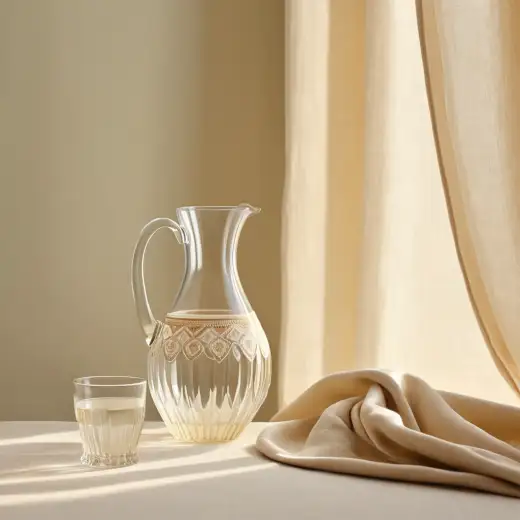
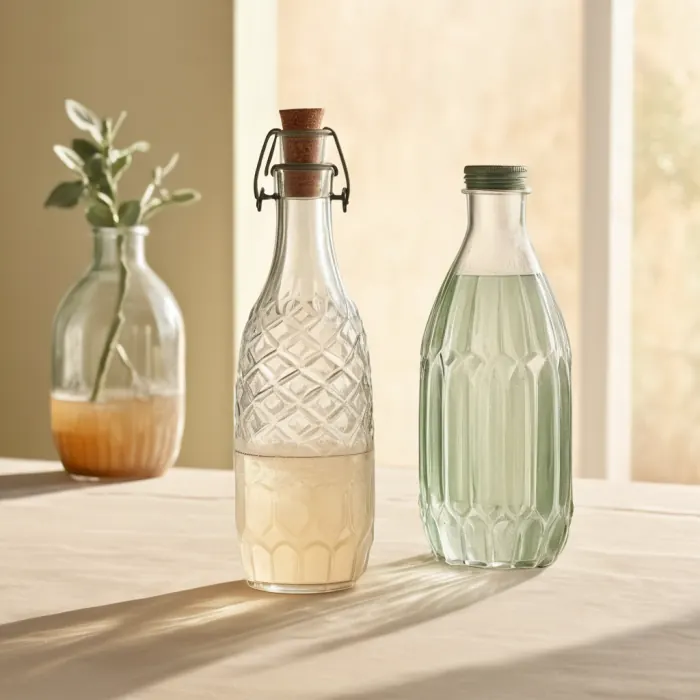
The carafe is a glass vessel with a narrow neck and a wide belly, used to hold water, fruit compote, or berry drink. It stood on the shift supervisor's desk and on the holiday tablecloth alike, and pouring from a carafe was always a calm gesture, a little ceremonious, with no fuss about it.
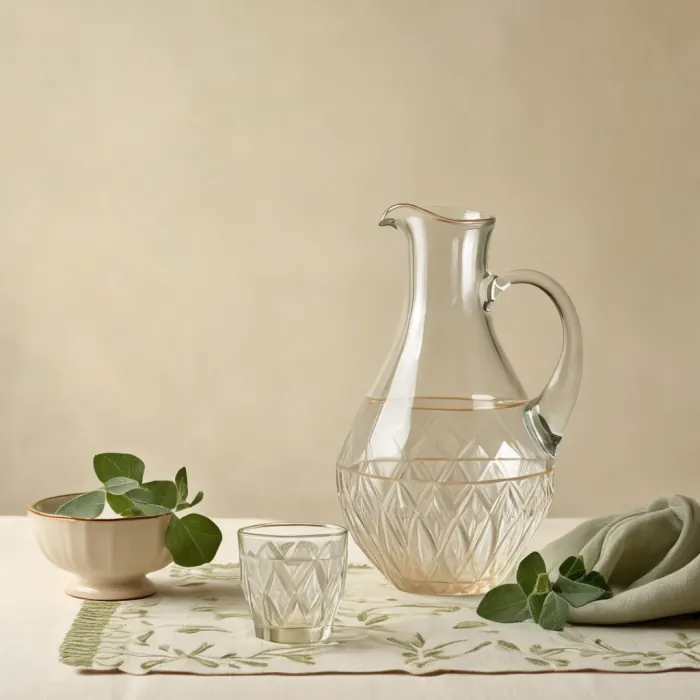
Glass that knew how to hold its posture
The carafe is a thing with posture. It didn't sprawl across the table like a potbellied teapot, nor huddle in a corner like a glass. It stood upright, confident, widening slightly toward the bottom and narrowing toward the neck, as though it were always standing a touch at attention. There was a calm importance to it, not for show but inborn.
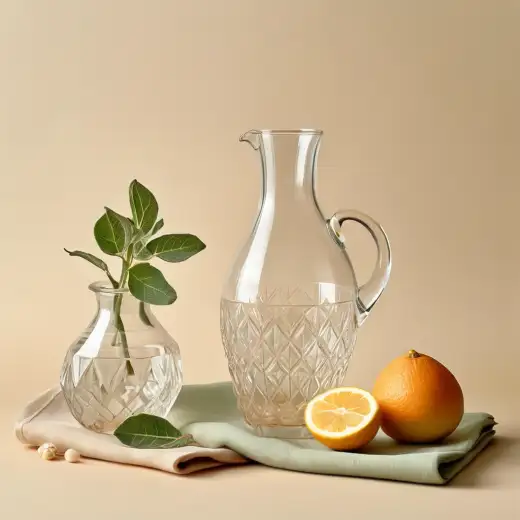
Carafe glass came in many kinds. Plain and smooth, clear as spring water. Or faceted, catching the light and scattering it across the tablecloth in cheerful little sparks. There were carafes with patterns, with a frosted band, with a shaped stopper on top. But even the most modest of them looked more dignified on the table than any bottle.
And the water in a carafe seemed different. Not just water from the tap, but water that had been shown respect: poured into a beautiful vessel, set in a place of honor, capped with a stopper. The carafe seemed to say: what's inside me deserves to be served beautifully. That little ceremony turned ordinary drinking into a tiny ritual.
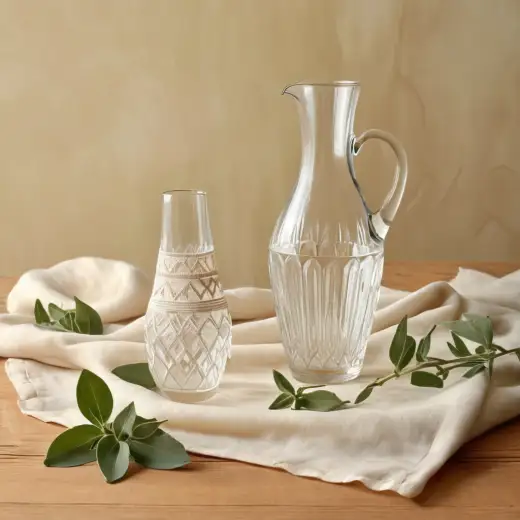
The carafe on the shift supervisor's desk
There was a special, working carafe, the one that stood on the shift supervisor's desk. It was a mark of order and calm. Where there's a carafe, there's the person in charge, there matters are decided, there nobody runs about; they talk things over deliberately. A carafe on a desk was like a little flag of good sense planted amid the factory bustle.
Pouring yourself water from such a carafe was an art unto itself. Lift the stopper, tilt it unhurriedly, let the water flow in an even stream, set it back, take a sip. While a person went through all this, they seemed to take a pause, cool down, gather their thoughts. You couldn't pour from a carafe in a hurry; it simply wouldn't allow it, the narrow neck made you slow down on its own.
And so a carafe on the supervisor's desk is almost a tool for managing the mood. Someone gets heated, someone comes running with a problem, and the boss calmly reaches for the carafe, pours, takes a drink, and the atmosphere cools a couple of degrees all by itself. In the world of an unhurried factory such a gesture is prized highly: it shows that the rush is never more important than the work.
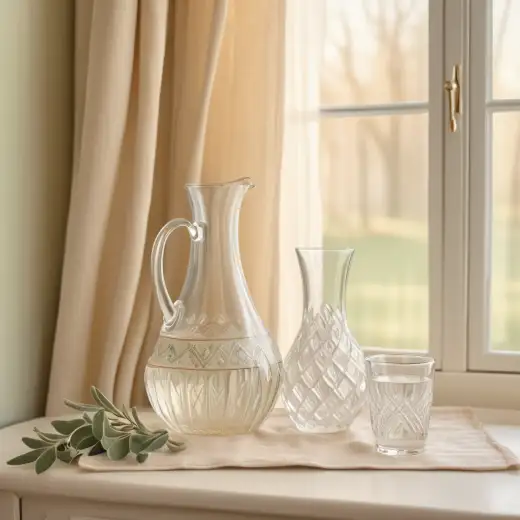
The holiday tablecloth and its debut in society
If on weekdays the carafe held water, on holidays a whole different life began for it. It was taken out of the cabinet, polished to a shine, and set right in the center of the laid table. There it was the host: tall, dressed up, reflecting the light, and beside the pies and salads it looked like a little glass tower.
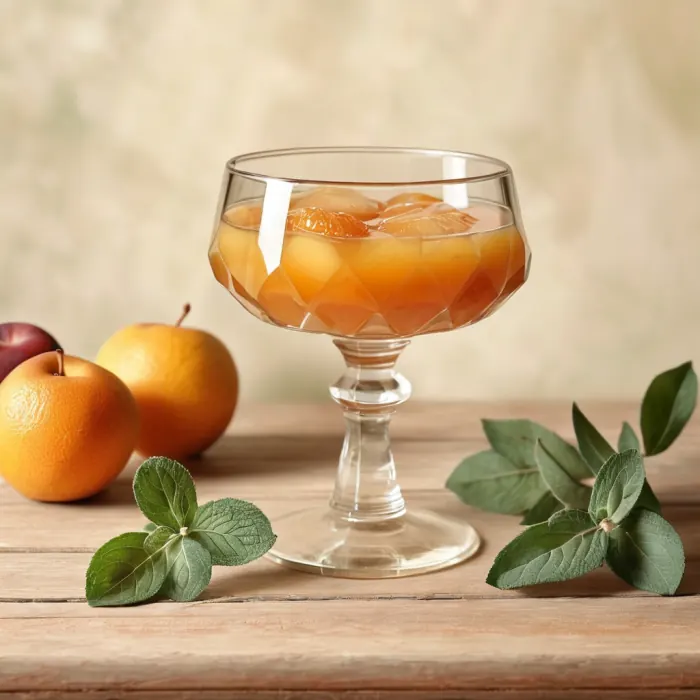
On a holiday the carafe was filled not with water but with fruit compote, berry drink, or juice. A ruby, amber, deep-cherry drink in clear glass looked rich and tempting. The children eyed it all evening and waited for it finally to be poured. And when it was, the colored stream in the lamplight seemed like something utterly festive.
A carafe on the holiday table was a sign that people had prepared in advance, made an effort, set the table with heart. It wasn't a jar plonked down in haste, but a vessel specially readied for a special day. And when a grown-up took it by the neck and went around the table filling the guests' glasses, there was an old household rite of hospitality in it, understood without words.
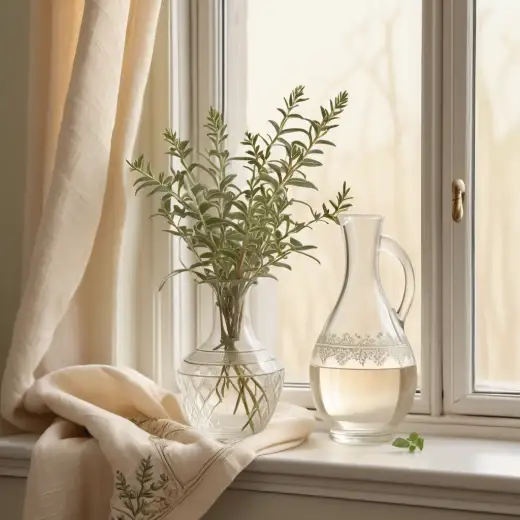
A gesture with no hurry in it
The very mechanics of pouring from a carafe are built against fuss. A bottle you can jerk, a jar you can slosh, but a carafe demands two hands and attention: one holds the body, the other steadies the stopper or guides the stream. There's no racing here. The carafe physically refuses to let you hurry, and in that lies its quiet wisdom.
So pouring from a carafe is always a little bit of a ceremony. Tilt it, wait for the glass to fill, straighten up, set it back. A few seconds of calm stitched into a simple action. And that's exactly how you poured for a guest: unhurriedly, watching so as not to overfill or spill, so it came out neat and lovely.
That calm precision is very much in the spirit of our game. Cheremsha is all about such gestures: do it evenly, on time, without a jerk. The carafe is a perfect mentor in this department. It seems purpose-built to remind you: beauty comes to those who don't fuss but move smoothly and see it through.
Little tricks of carafe housekeeping
The carafe had its own daily routine and its own chores. Washing it was a task with a catch: your hand won't fit inside, the neck is narrow, and over time a film settles on the walls. Homemakers knew the tricks: tip in something fine and grainy, add water, give it a good shake, and the glass shone again. This trick was passed down from generation to generation like a small household secret.
The stopper was a separate concern. It had a way of getting lost, rolling under the cabinet, getting mixed up with the stopper from another carafe. A carafe without its stopper already looked less dressed up, as if it had lost its hat. So stoppers were kept safe, and if the original did go missing, a replacement was found and grew familiar, like something of one's own.
And the carafe also loved a fixed place. It had its own rightful spot: on the table, on the cabinet shelf, on a tray. Move it and the eye snags right away, as if something is missing. Things like that become anchor points in a home: as long as the carafe is in its place, it feels as if everything else is in order too.
The carafe versus the plastic bottle
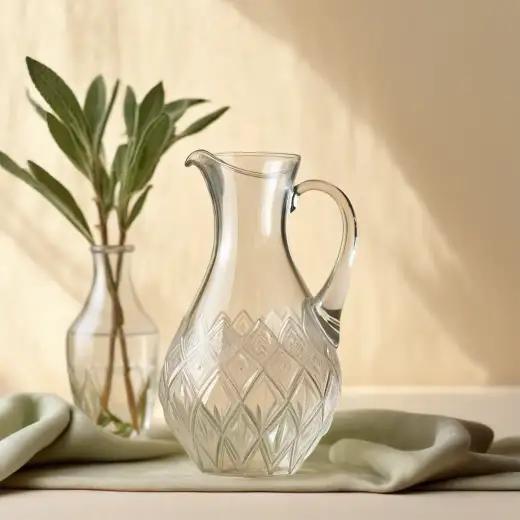
In time, carafes were elbowed aside by light plastic bottles and handy lidded pitchers. You don't have to wash them with any cleverness, you're not afraid to drop them, you don't mind them. Convenient, no argument there. But along with the convenience went that small solemnity the carafe brought to the table simply by being present.
From a bottle you pour in passing, on the run, without looking. From a carafe you can't do that; it makes you stop. And that difference matters more than it seems. The carafe turned drinking water into a tiny pause in the day, into a reason to slow down for at least half a minute. A bottle grants no such pause; it's all about speed.
That's why the carafe is remembered with particular tenderness. Not because the water in it tasted better, but because a certain tempo of life took shape around it: measured, neat, cozy. The glass vessel turned out to be a keeper not so much of water as of unhurriedness.
Why it remains a symbol of coziness
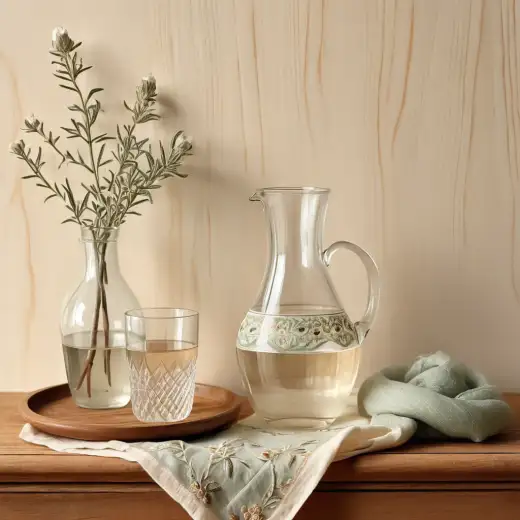
The carafe outlived its era as an image. It still surfaces in memory at the words "a laid table," "a calm conversation," "a family celebration." Just picture a carafe of compote in the center of the table, and your heart warms at once, as if you'd come back to a place where you were awaited and cared for.
Several good things came together in it at once: hospitality, order, unhurriedness, and the beauty of a simple gesture. It was both a working instrument of calm on the shift supervisor's desk and a festive ornament for a celebration. And in both cases it taught the same thing: don't hurry, do it beautifully, respect the water, the guest, and the moment itself.
That is exactly why the carafe is so at home in the world of a factory without fuss. It is a glass reminder that calm can be set in the center of the table and admired. Pour without hurry, set it back, take a sip. And the day, like water in faceted glass, becomes a little clearer and a little calmer.