Word
The Enamel Bowl
Light, ringing, almost weightless in the hand and yet utterly indestructible, the enamel bowl has lived through so many hikes, summer cottages, and meals grabbed on the run that it long ago stopped being mere dishware. The chip on its side isn't a flaw but a notch in its memory, a mark of character, proof of long and honest service.
Dishware that fears nothing
The enamel bowl belonged to that class of things you buy once and forget when you did. It didn't shatter like porcelain, didn't bend for good like thin tin, didn't fear fire, boiling water, or a fall off a stool. You could drop it on a stone floor and it would only cry out with a ring and roll under the table, getting off with a fresh mark.
That sturdiness put your mind at ease. With a fragile cup you walk as if carrying a crystal dream, afraid to breathe. With an enamel bowl you live freely: pour, eat, toss it in the sink, and not a trace of worry. It was made not to be admired but to be lived with, and it took life in all its messy forms.
How this little marvel is made
The bowl's secret hid in its double nature. Inside, a sturdy metal body, light and springy. Outside and in, a layer of enamel, that very glassy crust that made the dish smooth, glossy, and pleasant to the touch. The result was a happy union: the metal gave durability, the enamel gave cleanliness and a pretty color.
The colors came in the homiest shades: white with a blue rim, soft sky blue, cream, sometimes scattered with tiny flowers or polka dots around the edge. That little decoration made a plain dish a touch dressier, as if it knew it would end up not only in a camping pot but on a holiday table too.
The enamel was hard, but not eternal. A sharp knock could chip it off, baring the dark metal beneath. And right there began the most interesting part of the bowl's biography, its life with chips.
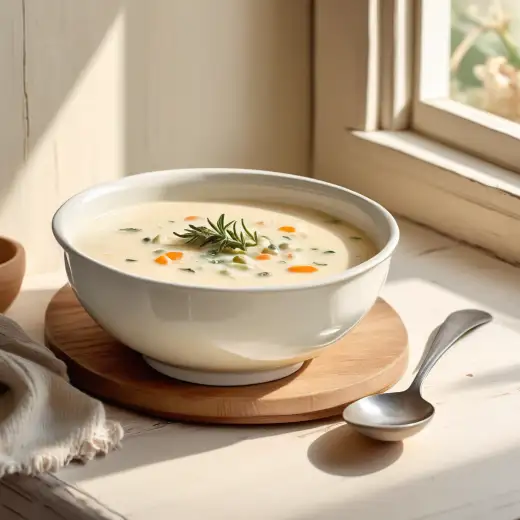
A chip isn't a defect, it's character
A brand-new bowl, smooth and without a single scratch, looked flawless yet somehow faceless. It took on real character later, when the first dark chip appeared on its side. That chip was like the first wrinkle on the face of someone who has smiled a great deal, not a fault but a trace of a life lived.
Each mark held a story. This chip, from a fall onto the stone floor of a cottage kitchen. This scratch, from the too-eager spoon of an impatient eater. This darkening along the rim, from hundreds of meetings with hot soup. You could read a bowl like a palm, a chronicle of meals, rest stops, and long teatimes.
It never crossed anyone's mind to throw a bowl out over a chip. The chip didn't stop it from doing its job: the soup got no tastier because of it, but no worse either. So the dish served on, proudly wearing its marks the way an old soldier wears service stripes.
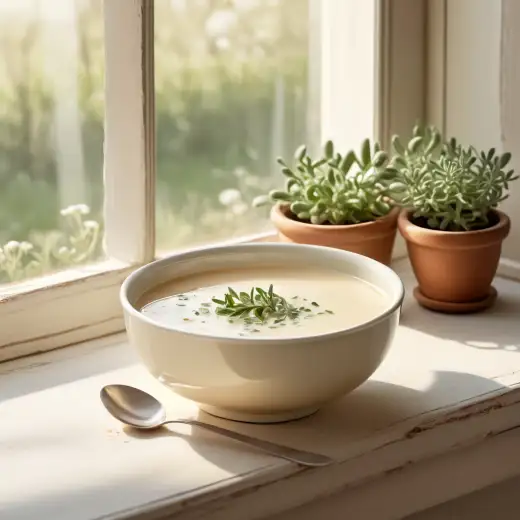
Companion of hikes and cottage days
The bowl truly came into its own far from home. On a hike it was priceless: light, it didn't weigh down the pack; sturdy, it didn't fear the jostling; unfussy, it washed clean in a stream or with a handful of grass. People ate porridge from it by the fire, drank strong tea, warmed their hands on its warm sides on a cold morning by the river.
At the cottage the bowl became a jack of all trades. People rinsed berries in it, kneaded dough, held the small pickings from the garden beds, gave the cat its water, gathered up little potatoes. Universal, never failing, it flowed from one role to the next without complaint and without a break to rest.
The ring of the enamel bowl was a mark of unhurried life all its own. A spoon against its side answered with a special homey chime, and that sound meant the soup was ready, the rest stop had happened, and the fuss was left somewhere far behind, back in the city.
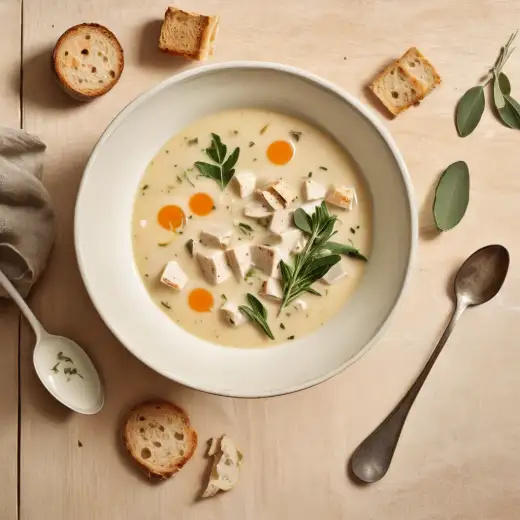
The last line between soup and hurry
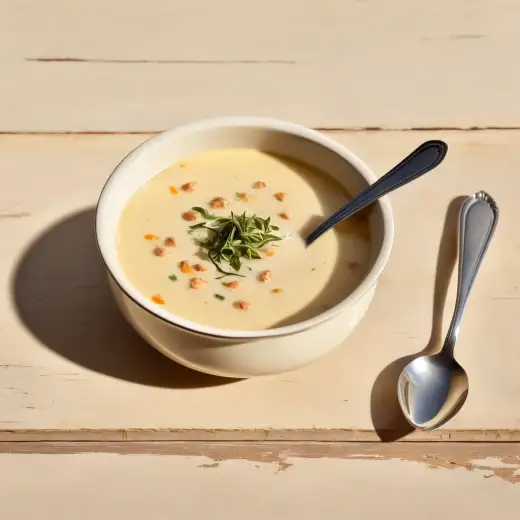
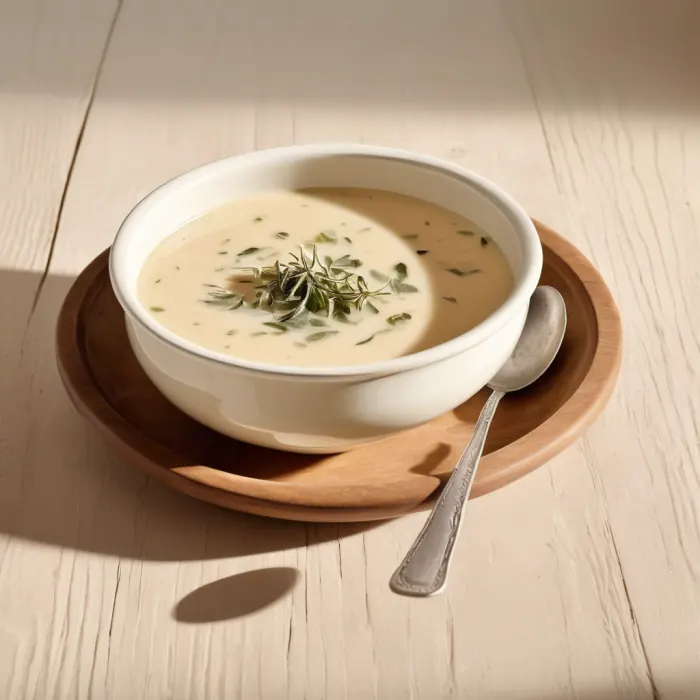
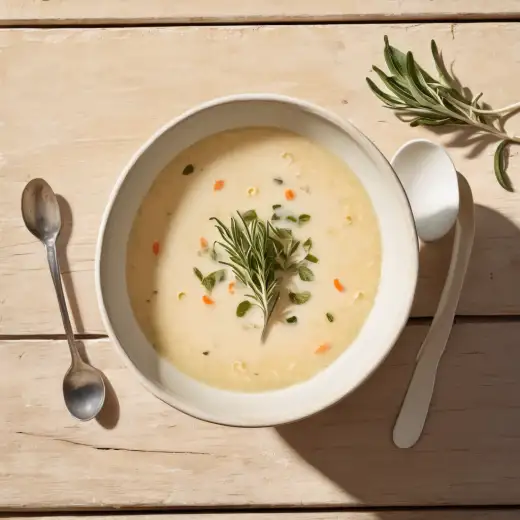
In the cozy factory folklore of Cheremsha the mascot, the enamel bowl was handed an honorary role, fondly called the last line between soup and hurry. It sounds like a joke, but the meaning is real enough. As long as a full bowl of hot soup stands on the table, there is absolutely nowhere to rush. You can't eat soup on the run, you can't gulp it down in haste, you'll scald yourself.
The bowl makes you sit, breathe out, and get on with the only right thing to do, eating calmly. It holds the line against the endless scurrying: while you're bent over it, the world can wait. The hot steam, the familiar pattern on the rim, the comfortable weight of the spoon, all of it an anchor that holds a person in the present moment.
The rabbit with a lion's heart knows: whoever has managed to eat from such a bowl without hurrying is already halfway to beating the fuss. A fed, warmed eater in no rush is far wiser than a hungry, jittery one. That's why the bowl stands guard, between a normal life and a pointless race.
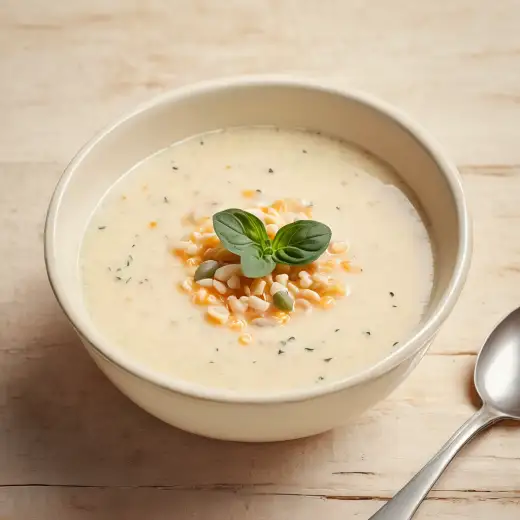
The quiet philosophy of an unfussy thing
The enamel bowl taught no grand truths, but by its very existence it showed how one ought to treat things, and life. It was honest: it did what it promised, with no tantrums and no claims to being special. There was no need to keep it behind glass or bring it out for special occasions, it worked every day and never tired.
In a world where the new so often turns out to be disposable, that durability seems almost like magic. The bowl outlived its owners, passed from the elders to the young, traveled from one cottage to another, and stayed itself everywhere. Chip was added to chip, and the service went on.
Maybe that's the quiet lesson of old dishware: value what serves long and simply, don't fret over scratches, don't toss a thing out over a trifle. A chip is character, not a verdict. And soup from a bowl with a history is always a touch warmer than from a flawless new one.
Memory kept on a shelf
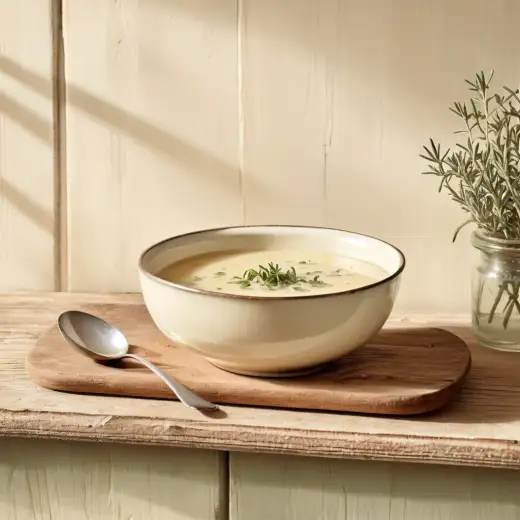
These days you'll meet an enamel bowl on a cottage shelf more often than in a city kitchen, but pick it up and the warm memories come back on their own. The smell of a campfire, the splash of river water, a grandmother's voice calling everyone to dinner, the chime of a spoon against the ringing side, all of it wakes at a single touch of the cool enamel.
Such dishware doesn't age in the ordinary sense of the word. It simply gathers memory the way it gathers chips and marks. And the more there are, the dearer the bowl becomes to whoever remembers where each one came from.
So when we polish up an old enamel bowl and admire its homey pattern, we hold in our hands not just a dish but a small museum of calm meals. Light, sturdy, with a chip on its side, it stands ready as ever to take up its post, the last line between hot soup and the endless, needless hurry.